Why a Valley Floor Holds the Morning Mist
Why a valley floor holds the morning mist: read the signs of pooled cool air, sheltered slopes and changing sunlight to understand when it may clear.
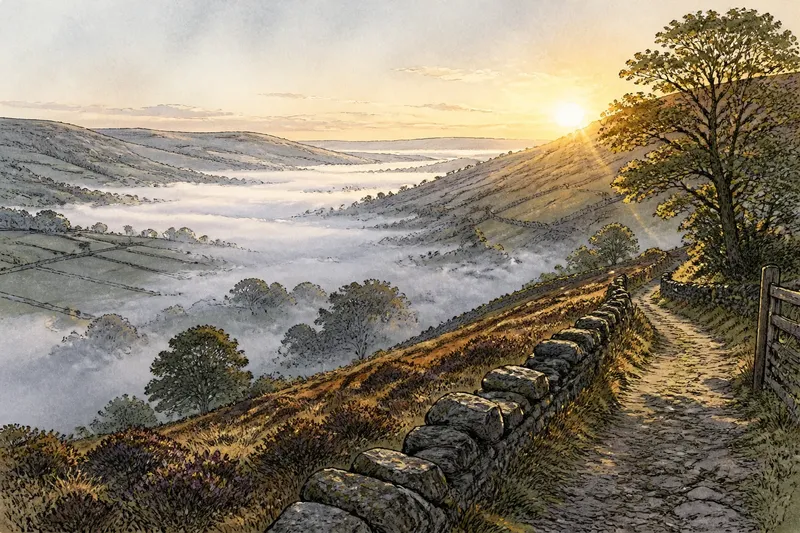
On a clear morning, the lane along the ridge may already be bright while a ribbon of mist still fills the valley below. Why a valley floor holds the morning mist comes down to the way cool air gathers in low ground, while sunlight and moving air reach exposed slopes sooner. A few careful observations can help explain why the view changes from one part of a walk to another.
1. Cooler air drains towards low ground
After sunset, the land loses warmth. The ground cools the thin layer of air touching it, and that denser air can flow downhill under gravity. It collects in hollows, along valley bottoms and behind small rises, much as water follows a dip in the ground.
This movement is often called cold-air drainage. It does not require a river or a steep mountain valley. A shallow dip between fields can collect cooler air too, although the shape and shelter of the land affect how clearly the effect appears.
In the low ground, moist air can cool until some of its water vapour condenses into tiny suspended droplets. Those droplets scatter light and make the air look white or grey. Mist is not a separate blanket that has settled on the grass; it is a visible cloud of droplets close to the surface.
To look for this pattern, compare the valley floor with a nearby slope at the same time. Notice whether mist follows the lowest contours, gathers in hollows, or breaks around rises. The shape of the patch is a clue to how the air is arranged, not simply a sign that the whole area has the same weather.
2. Sheltered ground lets the cool layer stay put
A valley’s sides can limit the mixing that would otherwise stir the near-ground air. When the air is calm, the cool layer may remain pooled below warmer air above it. This arrangement is called a temperature inversion: instead of becoming steadily cooler with height, the air is warmer above the surface layer.
Inversion conditions can help mist persist because the pooled air is not quickly mixed with air from higher up. The valley’s shape matters, but so do gaps, bends and openings. A broad, open valley may exchange air more readily than a narrow, sheltered hollow; a low ridge or wooded bank can also interrupt the flow.
Look at where the mist has edges. If it clings to the bottom of a sheltered basin but thins near a gap, that change may reflect air moving through the opening. If it lies in several separate hollows, each may be collecting cool air independently. These details help distinguish a local pool from a larger sheet of cloud hanging over the landscape.
Vegetation and buildings influence the immediate scene, too. Trees and walls can shelter patches from a light breeze, while an open field may allow more movement. They do not create a simple rule: the useful question is whether the local feature blocks or channels air in that particular spot.
3. Moisture supplies the droplets
Cool air alone does not make visible mist. There must also be enough moisture for droplets to form as the air cools. Damp ground, wet vegetation, nearby water and moist air arriving from elsewhere can all contribute, but the balance varies with the place and the weather.
A valley with a stream may look especially misty, yet the stream is only one possible source of moisture. After rain, fields and woodland can release moisture as they dry. A low area can also collect damp air without sitting beside open water. The visible mist records the combined conditions, not a single cause.
Fog and mist describe the same basic phenomenon: tiny water droplets suspended near the ground. In everyday weather reporting, the distinction usually concerns how much visibility is reduced. For a walker, the practical point is that either can obscure a path, a junction or a vehicle, even if the patch looks thin from a hillside.
Notice whether the mist is dense near one wet hollow, spreads across the valley, or appears in strips along a stream corridor. Those patterns can suggest where moisture and sheltered air meet. They are clues, not a way to identify the moisture source with certainty just by looking.
4. Higher slopes can clear first
A slope facing the rising sun may warm before a shaded valley floor does. As the ground warms, it heats the air above it, and the droplets may evaporate. Sunlight can also reach a hillside while the valley bottom remains in the shadow of its own sides.
That difference helps explain the familiar sequence: bright upper fields, a grey band below, then a gradual opening in the valley. The mist may thin first at its edges or where sunlight reaches the ground, while the coolest, most sheltered part remains opaque. A passing cloud can interrupt this pattern, so the first bright patch is not a promise that the whole valley will clear at once.
Air movement matters alongside sunlight. A light breeze can mix the pooled layer with drier air and break the mist into ragged pieces. If the air remains still, warming may take longer to reach the bottom. Watch for movement in tree leaves, smoke from a chimney or the direction in which loose mist trails, while remembering that these small signs apply only to their immediate surroundings.
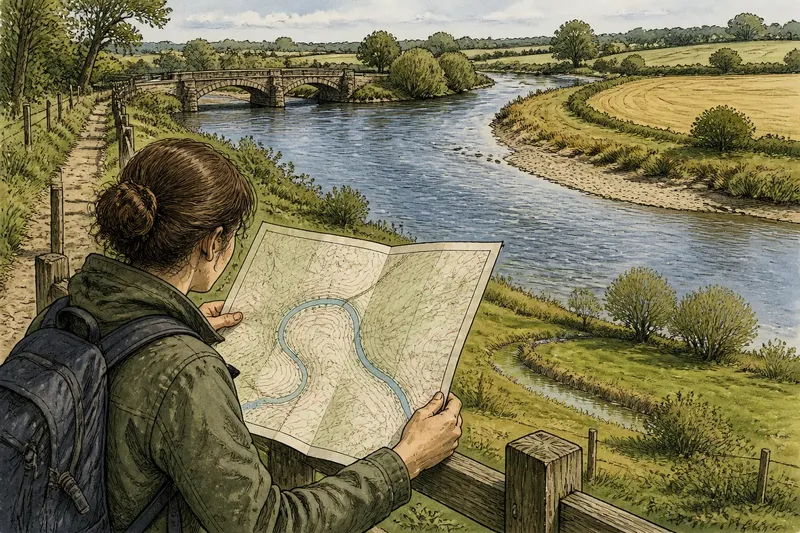
Say you reach a footbridge at dawn and see mist covering the fields below, while a nearby slope is already clear. If the sun is beginning to reach the valley edge and the mist is thinning there, you might expect that margin to open further as warming continues. The centre could remain misty, especially if it is sheltered and still; use the visible path and current conditions, rather than that expectation, to decide where to walk.
5. The valley floor can retain mist after sunrise
Sunrise does not warm every part of a valley at once. A narrow valley may receive direct sun late, and its floor can remain shaded by steep slopes. Even when sunlight reaches the bottom, the ground and air need time to warm enough for droplets to evaporate.
The mist can also persist if the air stays moist and calm. A weak breeze may not mix the whole cool layer, while a sheltered hollow can remain cooler than nearby open ground. Conversely, a change in wind direction may move the mist sideways or disperse it before the valley floor warms much. Each morning has its own combination of conditions.
For a useful observation, note the order of changes rather than trying to predict an exact clearing time. Does the mist retreat from the sunny side? Does it lift into wisps, thin from the edges, or shift along the valley? Does the ridge stay clear while the lowest fields remain hidden? These comparisons show how the valley is responding to light and air movement.
If visibility matters for a journey, treat a clear ridge and a misty bottom as different conditions. A road can disappear into the thicker layer just beyond a bend. Slow down, use appropriate lights and follow local road guidance; do not rely on an apparent gap in the mist to remain open.
6. Read the mist without treating it as a forecast
Morning mist is a local feature, so one valley does not describe the weather everywhere nearby. A neighbouring basin may be more exposed to wind, open to the sun or supplied with less moisture. Even opposite sides of the same valley can differ because of shade and shelter.
Keep a simple record if you regularly visit the same place: write down whether the night was clear or cloudy, whether the air felt still, where the mist gathered and which areas cleared first. A notebook is enough. The purpose is to sharpen your attention to recurring local signs, not to turn a few observations into a dependable forecast.
For current conditions, use a recognised local weather service alongside what you can see on the ground. If you are walking, cycling or driving, choose a route and pace suited to the visibility you actually have. Mist can hide uneven ground, water’s edge and other people before it looks especially thick from a distance.
What should you look for when the valley is misty?
Why does mist gather in the lowest fields?
Cool air can drain downhill and collect in hollows, where it may cool moist air enough for droplets to form. Shelter and weak mixing can help that pool remain in place.
Why is the ridge clear while the valley stays grey?
Ridges are more exposed to moving air and may receive sunlight earlier than the valley floor. The sheltered bottom can stay cooler and hold droplets for longer.
Does a nearby stream cause the morning mist?
A stream can contribute moisture, but wet soil, vegetation and moist air can do so as well. The mist alone does not identify which source matters most.
Can you tell when the mist will clear?
You can watch for sunlight, rising warmth and breeze breaking the mist, but local conditions can change the pattern. Treat these signs as observations, not a precise timetable.
Why a valley floor holds the morning mist becomes easier to read when you look at three things together: the low shape of the land, the shelter from moving air and the arrival of sunlight. On your next clear morning, compare the shaded bottom with a sunlit slope and notice where the mist first loosens. That small contrast can make the changing landscape legible without asking it to predict more than it can.